Table of Content
The mention of prefabricated homes might bring to mind low cost mobile homes, but many net zero home builders choose to build their homes this way. Constructing the main structure of a home indoors has many advantages. It’s climate controlled, which makes it easier on the builders. But also having a factory-type setup makes it a lot easier to do quality control and do construction with the kind of tight tolerances that are required in net zero building.
A family of four in a two-bedroom cottage with a single bathroom and a leaky oil furnace might use less energy than a zero energy home that was larger and didn’t maximize energy efficiency. Gambrick’s High Efficiency Tiny Homes have superior indoor air quality and comfort while reducing heating and cooling energy use. They’re super insulated and virtually air tight, requiring minimal energy for HVAC. Because of all this a typical Gambrick Tiny House uses up to 90% less heating and cooling energy and has an average 70% less overall energy consumption compared with a standard Tiny Home. Some of the features and ways of doing things will be new to most homes, though much of what makes up a zero energy house will just be more efficient versions of what’s already in them.
Net zero homes explained (with 7 beautiful examples)
As part of the DOE’s Zero Energy Homes Initiative, Premier Homes built 95 entry-level houses in Rancho Cordova near Sacramento, California, in 2004. Each is built with advanced energy-saving features and a 2.2-kilowatt photovoltaic system. Global climate change is today’s most pressing issue and most Americans favor taking meaningful action. Buildings alone are responsible for 40% of the total energy used in the United States.

There are two types of spray foam insulation, open-cell and closed-cell. Well insulated walls not only reduce energy consumption, but also greatly increase the long-term durability of your Tiny House. By maintaining consistent surface temperatures through the wall we reduce the possibility of mold growth. Thermal bridges can significantly reduce the overall R-Value of a wall.
Energy Efficient Tiny House
One of the simplest and most effective steps that homeowners can take is to electrify everything in their home in a systematic way. Loan programs and incentives make zero energy home ownership possible for everyone. Latitude is more than a real estate agency, it’s a global movement for change. Triple layered wall (R-64) is also a great option to adopt for the wall.
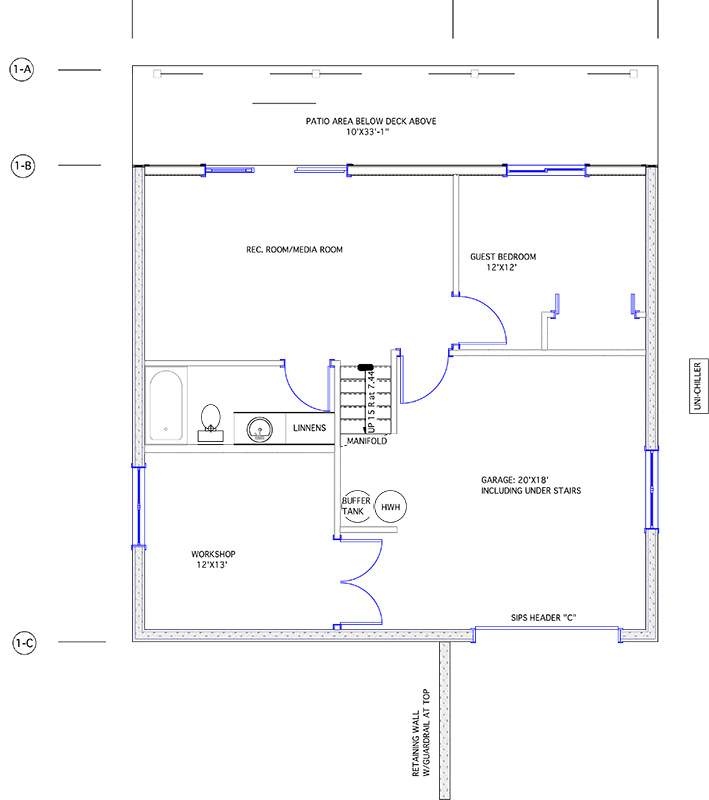
Energy modeling is typically done to show how a net zero homes design. Energy efficient lights appliances and HVAC systems allow the homeowner to live comfortably on a third of the energy required for an average code-built home. These plans will include window and door sizes and locations and will. Zero energy home design floor plans is one of the design ideas that you can use to reference your Design.
Series B home by Acre Designs
If Universal Design is desired to provide handicapped access to the mail floor the slab could be poured at. Using the same footprint as C-8 C-9 and C-11 this home offers a separate powder room on the main floor and a third or even fourth bedroom upstairs. Get free, objective, performance-based recommendations for top real estate agents in your area. If you’re ready to explore your net-zero home options, browse the Department of Energy’s database of eco-expert builders to consult trusted net-zero home professionals.
A general rule of thumb is that the colder the climate, the higher the R-Value is needed. Because of the highly specialized nature of solar tempering, homeowners will need to enlist the help of an industry expert who can orient the home and recommend the correct superinsulation and ventilation. These design considerations can add up to 5% to 8% to the total cost of the house. Better Buildings aims to make commercial, industrial, public, and residential buildings 20 percent more energy efficient over the next decade. Existing homes, multifamily residences and industrial and commercial buildings are also targets for efficiency makeovers and on-site solar production, but new single-family homes make a great lead-in. Their impact is relatively small, but they’re the easiest to develop and can provide a field lab and a set of standards for all buildings.
Preventing air leakage is the most cost effective measure of reducing energy loss and is the “secret sauce” of how we build such Energy Efficient Tiny Homes. Residential and commercial buildings are responsible for a large amount of global energy use, resource consumption, and greenhouse gas emissions. Residential energy use accounts for an estimated 20% of the total US energy consumption.

A zero energy home will protect you from a rapid rise in energy prices. Ten years from now, you’ll pay the same price you pay today to keep your lights on and your family warm. The amount should be at least two-thirds, and hopefully as much as ninety percent, less than consumed by a standard house the same size.
In addition, our RESNET HERS Rater is available to ensure you achieve your green building goals. Fossil fuel free, highly efficient, electric heating and cooling systems powered by renewable energy to achieve zero source energy consumption. The cost of energy is rising rapidly — and not just in dollars. Because non-renewable energy consumption, carbon emissions, and pollution are all on the rise. In the U.S., 39% of all greenhouse gas emissions come from buildings which include residential homes.

Zero energy homes are one of the cornerstones of a reduced carbon future that is not reliant on fossil fuels. With a zero energy home, you control where your home’s energy comes from with every flip of the light switch, every day. Individuals, couples, and families, of all ages and incomes live in zero energy homes, from the warm, humid climate of Florida to the very cold regions of Alaska.
When combined, these two materials chemically react, causing it to expand and harden. More Low-E. A triple pane window with 1 coat of Low-E vs. the same window with 2 coats of Low-E translates into 12% improvement in ER rating. Super efficient triple-pane glass, with its excellent resistance to temperature transfer, resists that sweaty glass look which can happen with less insulated glass.

This allows occupants inside to constantly have fresh air without wasting energy. It’s great to make your house extremely airtight, but the humans living inside still need to breathe. Ventilation is also important to get rid of excessive moisture and prevent the growth of mold. To bring fresh air into an airtight net zero home, mechnical ventilation is used.
Net Zero Energy Homes
Gambrick designs and builds Tiny Houses that are so energy efficient they don’t require conventional heating and cooling systems. This is achieved without sacrificing comfort or building aesthetics. Zero-Energy Plans LLC is the leading provider of proven Energy Efficient home designs to mainstream builders and do-it-yourselfers worldwide.


No comments:
Post a Comment